How to Build Smarter and More Flexibly with Concrete

Nils Magne Dahle
CEO
Modern construction projects demand solutions that unite aesthetics, efficiency, and documented sustainability. By challenging traditional methods and opting for "invisible" connections, the concrete industry can significantly reduce its CO2 footprint - without compromising architectural freedom.
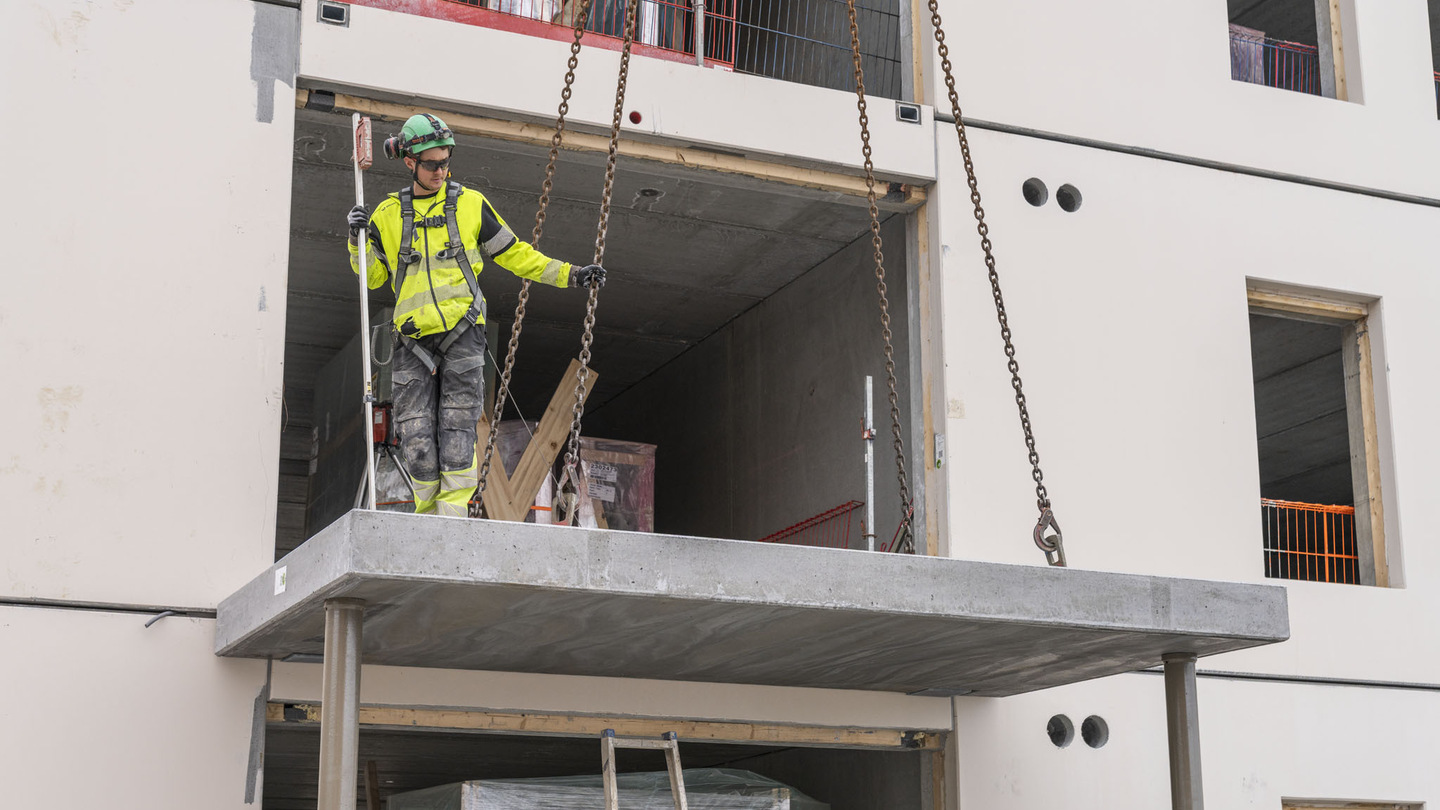
Concrete has long been the backbone of our infrastructure. However, in an era of increased focus on circular economy and emission requirements, we must ask ourselves: Are we building as smartly as we possibly can? The answer often lies in the details - or more precisely, in how we join elements together. At Invisible Connections, we specialize in solutions that not only simplify assembly but also eliminate the need for space-consuming and carbon-intensive structures like corbels and solid steel dowels.
Networking and early involvement are the very keys to sustainable innovation in the concrete industry.
Early Involvement is Key
To maximize the benefits of modern concrete technology, technical solutions must be integrated early in the design and engineering phase. This is a point Bjarke Hakmann, Regional Sales Manager in Denmark for Invisible Connections, is passionate about.
"Networking and early involvement are the very keys to sustainable innovation in the concrete industry. When we engage in dialogue with architects and engineers at an early stage, we can optimize the structure in a way that saves both time on-site and material consumption in the factory," says Bjarke Hakmann.
TSS: Invisible Stair Landing Connections with Integrated Sound Insulation
One of the greatest challenges in modern building design is impact sound insulation and the efficient assembly of staircases. Traditional methods often require extensive remedial work and visible recesses that must be grouted.
TSS stair landing connectors change this through a telescopic inner tube system. The advantages are significant:
- Reduced CO2: By using hollow profiles instead of solid steel dowels, material usage is reduced. Additionally, the amount of on-site grouting is minimized, leading to a lower carbon footprint.
- Architectural Freedom in Floor Plans: For over 50 years, architects have traditionally been forced to place noise-insulated rooms - such as kitchens, bathrooms, or technical rooms - adjacent to stairwells. This has been the only way to "guarantee" protection against impact noise, as documented sound insulation data for solid steel dowels has been lacking. With Invisible Connections' documented solutions, this restriction is eliminated. Architects are free to design living areas directly adjacent to the stairs without fear of noise complaints.
- Documented Comfort Regardless of Requirements: We deliver solutions that meet current impact sound insulation requirements, regardless of the project's classification. This provides developers and consultants with the assurance that acoustic standards are met without the need for complex, bespoke solutions.
BSF: Farewell to "Clunky Lego Bricks"
When it comes to beam-to-column and beam-to-wall connections, the BSF system has revolutionized how we perceive joints. By utilizing a heavy-duty sliding "knife" (internal steel member), the need for corbels on columns is eliminated.
I mine øyne ER betong det alternative produktet for et sterkt og holdbart miljø. Ved å redusere CO2-avtrykket i selve byggefasen gjennom våre løsninger, kombinert med betongens ekstremt lange levetid, skaper vi konstruksjoner som står seg i generasjoner. Det er sirkulærøkonomi i praksis. - Architects love BSF because it provides a far more aesthetic expression. We avoid the heavy, clunky corbels that often make concrete buildings look like Lego bricks. Instead, we achieve sleek, elegant joints that more closely resemble the precision seen in timber construction, says Bjarke Hakmann. In addition to the visual appeal, BSF offers environmental benefits. By removing the corbel, significant amounts of concrete and reinforcement are saved in every single column. Efficiency also increases as one can utilize continuous columns spanning multiple floors without interruption, which strengthens the overall structure.
Concrete as the Sustainable Alternative
In the debate over environmentally friendly building materials, concrete is often challenged. However, when looking at life cycle assessments (LCA) and the long-term perspective, the picture is more nuanced.
- In my eyes, concrete IS the alternative product for a strong and durable environment. By reducing the CO2 footprint during the construction phase through our solutions, combined with concrete's extremely long service life, we create structures that endure for generations. That is circular economy in practice, says Bjarke Hakmann.
How to Optimize Your Next Project?
At Invisible Connections in Åndalsnes, we combine Norwegian engineering excellence with global ambitions. Our goal is to make complex technical challenges easy to solve. Please contact us to discuss how we can optimize your next project.