Slimmer Structures and Drastic CO₂ Cuts: Meet the 60 P-Series

Espen Lundman Solberg
Sales representative / Export manager
When designing and manufacturing for the future, two objectives stand out: reducing material consumption and streamlining construction site efficiency.
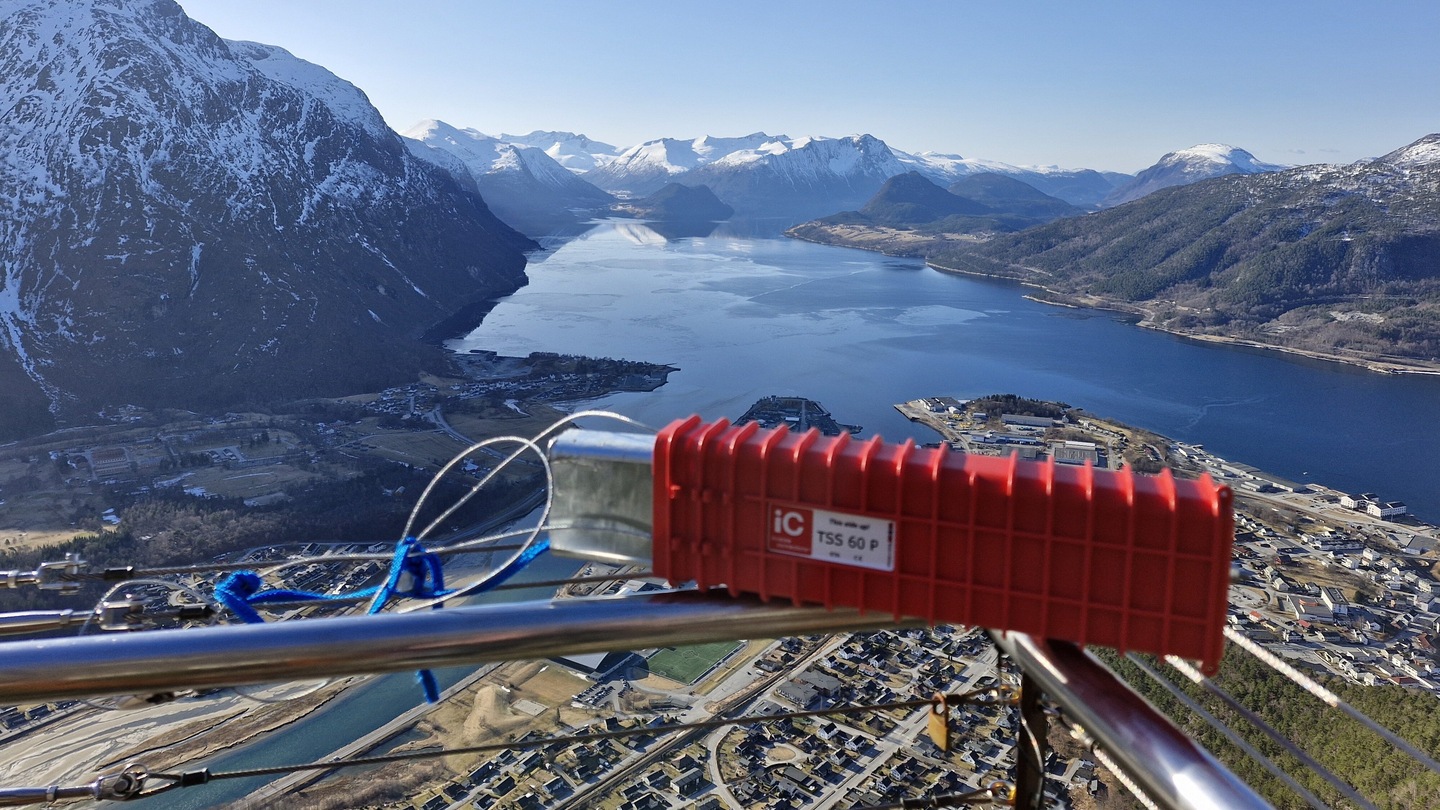
Our 60 P-series has become the gold standard for an increasing number of clients. By replacing traditional steel with 100% recycled plastic in the outer sleeve, we have created a series of telescopic stair connectors that significantly improve environmental accounting, material efficiency, and project economics.
Below, we have outlined the three most common reasons why structural engineers and precasters choose the 60 P-series.
Massive Concrete Savings
Historically in Scandinavia, standard landing slab thicknesses have hovered around 25 cm. However, we see no reason to use more concrete than structurally necessary.
- 150 mm slab thickness: The 60 P-series makes it possible to reduce the slab thickness down to just 15 cm. Using less concrete yields substantial savings in raw material costs while considerably shrinking the project’s carbon footprint.
- The domino effect: As stairs and landings become thinner, they also become significantly lighter. Lighter precast elements reduce the dead load on the building's primary load-bearing structures. This, in turn, allows engineers to down-spec and optimize foundations and columns.
- Lower transport and crane costs: Reduced weight translates to more cost-effective transport from the precast plant to the construction site. It also minimizes the need for the largest, most expensive mobile cranes during installation.
A Third of the EPD Footprint
Sustainability is about making smarter decisions during product development. While traditional telescopic connectors utilize steel for both the inner and outer sleeves, we have integrated 100% recycled plastic into the outer sleeve of the 60 P-series.
As a result, the Environmental Product Declaration (EPD) for the 60 P-series is reduced to just one-third compared to traditional steel-on-steel alternatives. The material-related CO₂ emissions are cut drastically.
In a market where developers, contractors, and green building certifications (such as BREEAM) impose increasingly stringent requirements on material carbon accounting, the 60 P-series provides a clear competitive advantage.
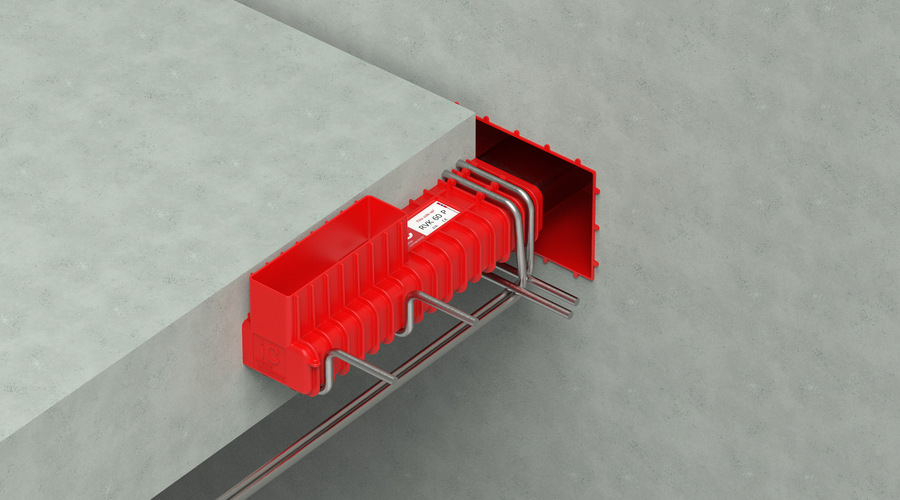
RVK 60 P in slab with REDi BOX
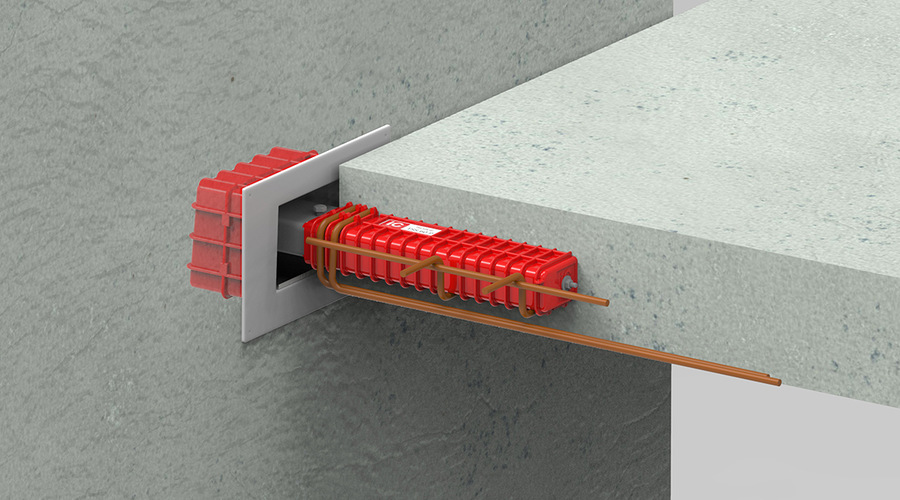
TSS 60 P with IC BOX SRU
Tailored for the Operators
Time is money - both on the factory floor and out on the construction site. The 60 P-series is engineered with smart features designed specifically to optimize workflow for the operators handling the products every day.
- Integrated "snappers": The units feature smart rebar snappers that allow local reinforcement to be clicked quickly and precisely into the exact position, eliminating positioning errors.
Reduced dead weight: Because the outer sleeve is made of lightweight plastic, the units are far easier and more ergonomic for factory operators to handle and cast into the forms.
- No special tools required: The system demands no additional training or specialized tools. It is engineered to be intuitive, fast, and highly efficient.
- Flexible acoustic solutions: The 60 P-series offers versatile options for structural sound insulation. For an independent, efficient acoustic barrier, you can specify the TSS 60 P with a vertical rubber flange (GF). Alternatively, you can use our IC Box recess former cast into the wall - a solution proven to deliver the highest level of sound dampening on the market.
No Need to Over-Engineer
The load-bearing capacity of the 60 P-series is rated at 60 kN. Structural calculations show that this capacity safely covers between 60% and 70% of all standard precast staircases.
By selecting the RVK 60 P or TSS 60 P, you get the exact structural strength your project requires, delivered at one of our most competitive price points. After all, there is no reason to over-engineer when you don't have to.
Contact us

Espen Lundman Solberg